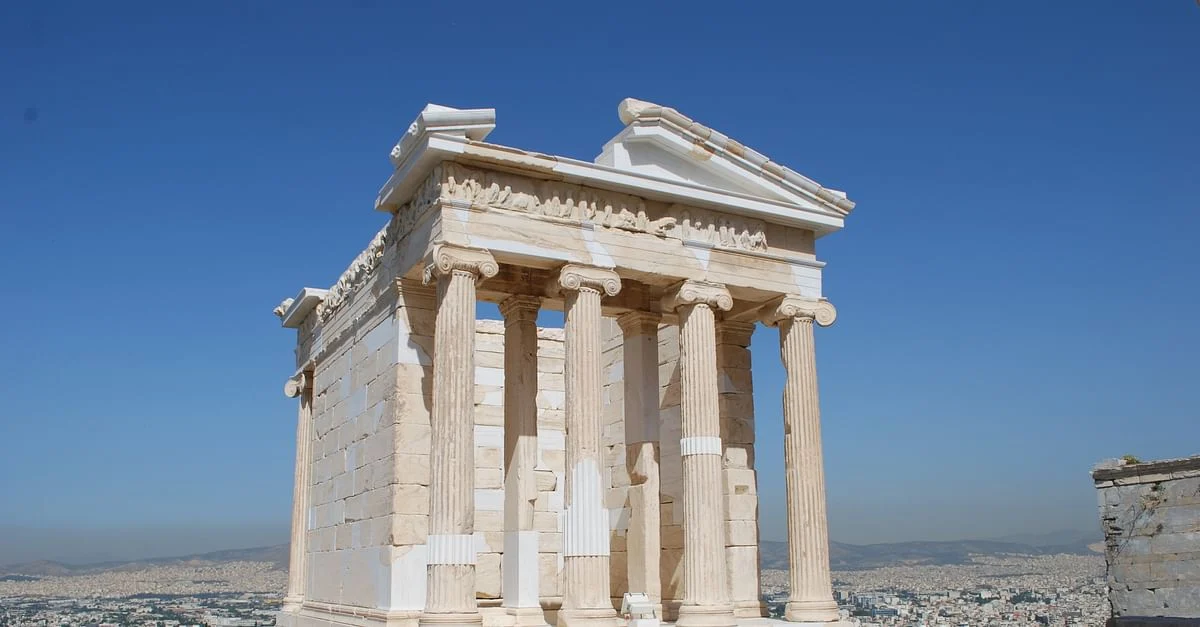
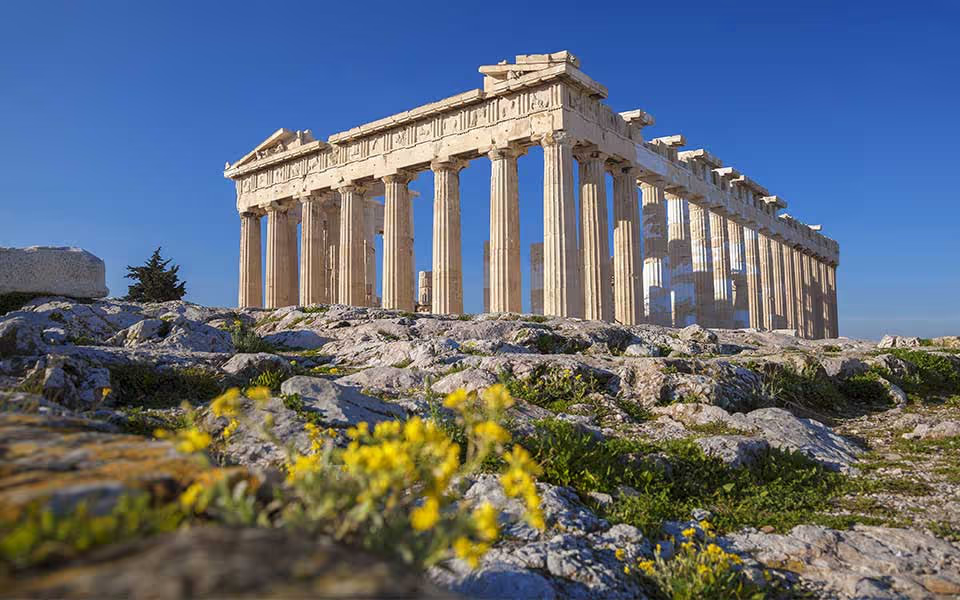
The Acropolis, an ancient citadel located in the heart of Athens, Greece, is one of the most famous and iconic archeological sites in the world. The word “Acropolis” (Ακρόπολις in Greek) literally translates as the ‘edge’ or ‘highest point’ of a city. Built in the 5th century BC, during the Golden Era of the Athenian Empire, the Acropolis was the religious and political center of Athens.The UNESCO World Heritage site is known for its collection of intricately decorated buildings, including the Parthenon, the Erechtheion with its Porch of Caryatids, the Temple of Athena Nike, the Theater of Dionysus and the Odeon of Herodes Atticus.The most famous building on the Acropolis hill is the Parthenon, a temple dedicated to the goddess Athena. The temple, which is considered one of the greatest examples of ancient Greek art and culture, is often confused with the Acropolis itself. You can read more about the differences here.The Acropolis attracts thousands of visitors from all over the world every day, to see the architectural masterpieces of the ancient world and to learn more about the culture and beliefs of ancient Greece. A visit to the Acropolis is more than just a tour of ancient ruins, it is a journey through time and an opportunity to witness the grandeur and beauty of one of the most important symbols of Western civilization.For a more comprehensive experience, make sure to visit the Acropolis Museum, which is opposite of the archeological site. If your tour does not include a stop there, Acropolis museum tickets are sold separately and can be bought in advance or on the spot.
The Parthenon, located on the Acropolis in Athens, Greece, is a temple dedicated to the goddess Athena, the patron of the city. It was designed by the architects Iktinos and Callicrates, with sculptures by the famous Phidias. According to ancient historians, inside the temple there once was a beautiful golden and ivory sculpture of the goddess, known as the Parthenos Athena (or the Virgin Athena). Although the fate of the original statue has been lost in the mists of time, several copies have been made.
The Parthenon, a UNESCO World Heritage Site, is considered one of the greatest examples of ancient Greek architecture and one of the country’s most popular tourist destinations. If you want to learn more about the Parthenon and the Acropolis, be sure to check out our blog post which provides in-depth information and interesting facts about these ancient treasures.

The Athens Acropolis opening hours are seasonal.
Summer* (April to Sep.): 8 AM to 8 PM
Winter (Nov. to Mar.): 8 AM to 5 PM
The last entrance to the Acropolis is half an hour before closing time.
*From the 1st of September until the 30th of October, the Acropolis opening times decrease by 30 minutes every 15 days, due to a gradual reduction in daylight hours.
The average visit lasts between 1.5 and 2 hours.
The Acropolis is located at Athens 105 58, Greece.
There are two entrances to the Acropolis. The main entrance is located on the western side of the Acropolis on Theorias Street, while the side entrance is on Dionysiou Areopagitou Street.
The Acropolis main entrance is a 10-minute walk from Monastriraki Square near Plaka and along the way you will go by Hadrian’s Library and the Roman Agora. This entrance gets very busy, especially during the summer.
The Acropolis side entrance is a 2-minute walk from the Acropolis Metro Station and near the Acropolis Museum. As it is dedicated to small group tours and skip-the-line ticket holders, this entrance tends to be quieter.


Visitors are only allowed to take water with them in the archeological site, no other drink or food is permitted. Bottled water can be purchased from kiosks near the Acropolis entrance, while on-site there are water fountains.
Before or after your visit to the Acropolis, you can head down the hill towards Plaka, Monastiraki and Anafiotika, where there are many quaint cafés and traditional tavernas to savor the local cuisine.
Near the entrance to the Acropolis, there is a gift shop where you can purchase souvenirs and memorabilia of your visit. Additionally, there are facilities available to store large bags and items, such as suitcases and strollers, which are not allowed on-site.
Restrooms can be found outside near the Acropolis entrance, while inside they are located at the Old Acropolis Museum.
There are many things to do in Athens and if you're visiting the Acropolis, there are a few sights you shouldn't miss.
Near the Acropolis you will find the New Acropolis Museum, the Ancient Agora, the Roman Agora, Hadrian’s Library, the Odeon of Herodes Atticus, the Theater of Dionysus, the Temple of Olympian Zeus and the Kerameikos Archeological Site.
Within walking distance of the Acropolis hill you can also visit the National Observatory; Filopappou Hill, where Socrates is believed to have been imprisoned; the Kallimarmaro Panathenaic Stadium, where the first modern Olympic Games were held and the Metropolitan Church of the Annunciation to the Virgin Mary.
You can also head to the Thision Open Air Cinema, which operates during summer months, the Monastiraki Flea Market and Ermou Street shopping district, as well as well as the popular Plaka and Koukaki neighborhoods for food and drink.


Athens offers a range of exceptional hotels with stunning views of the iconic Acropolis, catering to both luxury and budget travelers. For a truly opulent experience, consider the Electra Metropolis, boasting a rooftop pool and restaurant with panoramic views, or the historic Hotel Grande Bretagne, a landmark of elegance with unparalleled service and a terrace offering breathtaking vistas of the Acropolis.
If you’re looking for a more budget-friendly option, the Plaka Hotel provides comfortable accommodations and a rooftop terrace that showcases the Acropolis in all its glory.
Whether you’re indulging in luxury or traveling on a budget, these hotels place you close to Athens’ vibrant neighborhoods, like Plaka and Monastiraki, and within walking distance of must-visit landmarks, including the New Acropolis Museum, the Ancient Agora, and the charming streets of Koukaki. For more options, check out our page about hotels with the best view on the Acropolis!
Yes, the Acropolis in Athens is open to visitors. As of June 2022, COVID-19 vaccination or recovery certificates are no longer required to visit museums.
Yes, tickets are required to enter the Acropolis. There are, however, certain days when access is free.
Tickets for the Acropolis can be bought online, via the official website. For greater convenience and flexibility though, there are guided tours on the Acropolis that can be booked online.
Single-use tickets for the Acropolis cost €20 (reduced rate: €10), while 5-day combined tickets that include additional archeological sites and museums cost €30. Tickets at these prices are offered by the official website and don't include free cancelation.
The Athens Acropolis is a UNESCO World Heritage site with iconic masterpieces of ancient Greek architecture, such as the Parthenon, Erechtheion and Temple of Athena Nike, among many others. The Acropolis is an important historical and cultural site and a symbol of ancient Greek civilization, offering a glimpse into the past and a breathtaking view of the city.
In the past, the Acropolis has been used as a fort, place of worship, treasury and palatial residence. These days the Acropolis is a cultural UNESCO World Heritage site.
The Acropolis hill is located in the center of Athens, Greece.
The main archeological remains on the Acropolis that can be visited are the Propylaea, the Temple of Athena Nike, the Erechtheion and the Parthenon. You can also visit the Odeon of Herodes Atticus and Theater of Dionysus on the south slope of the hill.
Yes, there are guided tours available for you to explore the Acropolis. All tours focus on the main archeological site, while a few also cover surrounding areas and museums.
You can avoid the long queue to enter the Acropolis by buying a skip-the-line ticket. Guided tours typically allow you priority access to the archeological site.
The Acropolis is open to the public from 8 AM to 7:30 PM during the summer season and 8 AM to 5 PM during winter. During autumn, the opening times are gradually reduced every two weeks. For full details, visit our Acropolis hours page.
Most visits to the Acropolis last 1.5 to 2 hours.
Yes, there is an elevator for wheelchair users, which is near the main entrance. Inside the archeological site there are special paths to explore the Acropolis complex. Use of the elevator is not allowed under extreme weather conditions and strong winds.
To use the elevator, you must contact the ticket office in advance via telephone (+302103214172, +302109238470). Please note that on average 10 visitors with disabilities use the elevator at the Acropolis on a daily basis, with this number increasing significantly during the summer months.