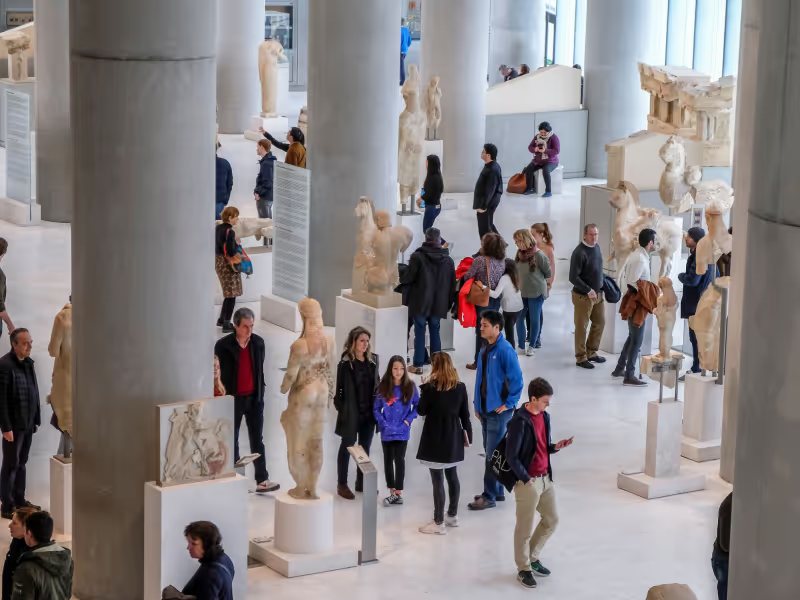
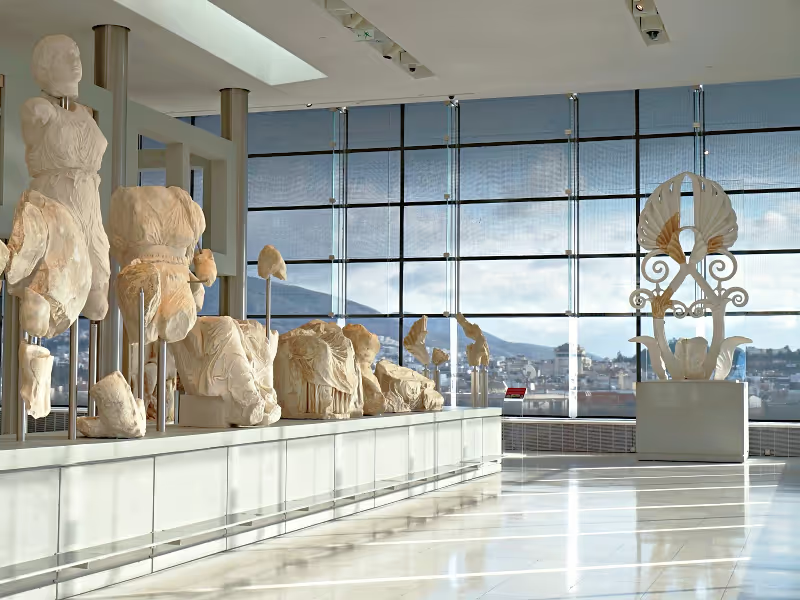
Inaugurated in 2009 as a successor to the antiquated museum perched on the Acropolis hill, the new Acropolis Museum is dedicate to the preservation and display of Greece's millennia-old history and culture. Situated just a short distance from the Athenian hill, the Acropolis Museum has quickly become an obligatory stop on any Athenian itinerary.
The museum's extensive collection range of artifacts includes sculptures and fragments from the Parthenon, the Temple of Athena Nike, the Erechtheion, and numerous other ancient structures that once graced the Acropolis. In addition to its regular exhibitions, the museum actively contributes to the intellectual and cultural discourse through the organization of various activities, informative talks and other special events on its grounds.
The Acropolis Museum’s importance extends far beyond its role as a cultural landmark and repository of ancient relics; it serves as a custodian of ancient Greek heritage, fostering understanding and appreciation of a civilization that profoundly shaped the world. As if all this were not enough, the museum offers a breathtaking view of the Acropolis that adds visual context to the historical wonders it houses.
A visit to the Acropolis Museum serves as an essential journey into the depth of ancient Athens and Greek culture. Spanning four levels, the museum beautifully encapsulates the evolution of the ancient Greek civilization through different eras.
Your journey begins at the museum's basement, which offers a unique glimpse into ancient Athens. Through a glass floor, you can peer at the remains of an old Athenian neighborhood that was discovered during construction, entombed in time and the building itself.
The ground floor, or “Gallery of the Slopes of the Hills” is built at an angle to mirror the climb up the hill and presents the daily artefacts of ancient Greeks living around the Acropolis. Exhibitions on this floor also reveal many details about the ambitious development of the Acropolis during the Golden Era of Athens.
Ascending to the “Archaic Acropolis Gallery” on the first floor, you are greeted by awe-inspiring statues and sculptures, hailing from 700 BC to 480 BC. This gallery also houses five of the six original Caryatids that adorned the enigmatic Erechtheion - a testament to ancient Greek craftsmanship.
The jewel of the Acropolis Museum, the “Parthenon Gallery” on the third floor, reflects the architectural prowess of the original Parthenon, while offering a captivating view of it. The gallery holds many original sculptures of the ancient temple, including a 160-meter frieze, pediments and metopes.
You can visit the Acropolis Museum every day of the year, except for a few national holidays, from 9 AM until afternoon or early evening, according to the seasonal opening hours.
The Acropolis Museum is located at Dionysiou Areopagitou 15 in downtown Athens, to the southeast of the Acropolis Hill. It is easily accessible by public transportation via the Akropoli metro station.
The Acropolis Museum is closed on the 1st of January, Orthodox Easter Sunday (16th April in 2023), 1st of May and 25th & 26th of December.
Yes, there are special ramps for wheelchairs at all entrances, as well as elevators and WCs on all floors of the museum.
Yes, the Acropolis Museum can provide visually impaired visitors with a short guide in Braille, which is available in Greek and in English at museum’s information desk.
Yes, there are two cloak rooms on the ground floor of the museum where visitors can leave personal belongings, large bags or backpacks. Any items you take with you inside will be scanned at the security point near the entrance.
Yes, photography is allowed in all areas of the Acropolis Museum, except for the Archaic Acropolis Gallery. The use of flash and professional equipment (such as portable lights, tripods, etc) is not permitted.
No, visitors are not allowed to bring any food or drinks into the museum’s exhibition galleries. The Acropolis Museum features a café with a terrace on the ground floor, offering a warm and cold refreshments, as well as light snacks. On the second floor there is a restaurant with a spectacular panoramic view of the Acropolis hill. Reservations can be made during the museum’s normal operating hours, via telephone (+302109000915) or by emailing restaurant@theacropolismuseum.gr
Admission to the Acropolis Museum is free on 6th of March (Melina Mercouri Day), 25th of March (National holiday), 18th of May (International Day of Museums) and 28th of October (National holiday).
The best way to skip the line at the Acropolis Museum is to buy your tickets in advance. Alternatively, you can also join an Acropolis Museum guided tour, which guarantees entry at a designated time.
No, pets are not allowed inside the Acropolis Museum. The only exception are guide dogs for visitors with disabilities.
General admission tickets cost €20 regardless of the time of the year. Reduced ticket rate is €10 and they are only available in person at the ticket booths. A full list of visitors eligible for free or reduced admission is available online.
You can get general admission tickets at the Acropolis Museum ticket desk, the museum’s official e-ticketing platform or third-party ticket and tour providers.
For reduced rate and free admission tickets you will have to visit the Acropolis Museum ticket desk in person.
Bookings for group tickets of 16 to 40 visitors can only be made online at groupbookings@theacropolismuseum.gr or via telephone by calling +302109000903 (Monday to Friday, from 9AM to 5PM).
You can buy Acropolis Museum tickets on-line via the official website, third-party resellers and tour operators.
The Acropolis and the Acropolis Museum are two distinct sites, and tickets for each need to be purchased separately. However, to simplify the experience, many tour operators offer combined guided tours of the Acropolis and the Acropolis Museum.
No, tickets sold through the official Acropolis Museum website do not include a guided tour, meaning that they only cover entry to the museum itself. However, if you want to enhance your visit with more insight and information on the exhibits, there are numerous tour operators available offering guided tours, which can be booked separately or including museum tickets.
Acropolis Museum tickets are non-refundable and cannot be changed after purchase. The only exception is when unforeseen circumstances prevent the Museum from being open to the public.