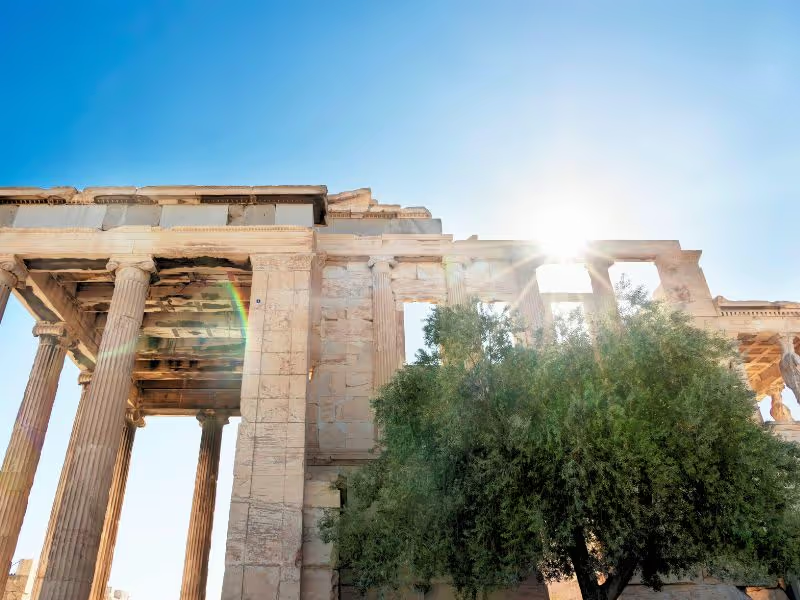
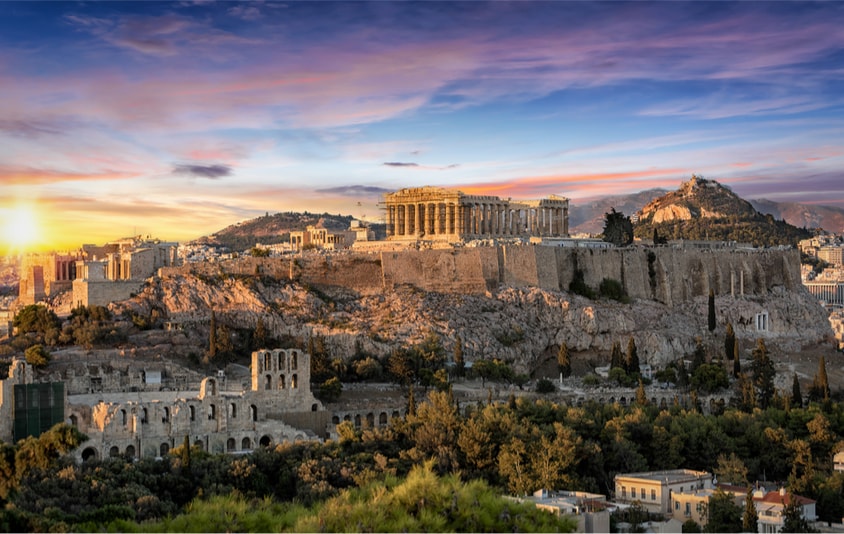
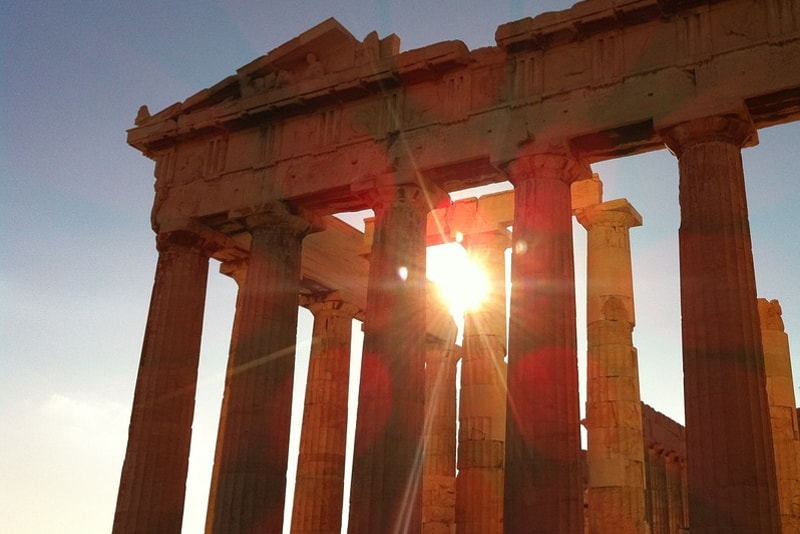
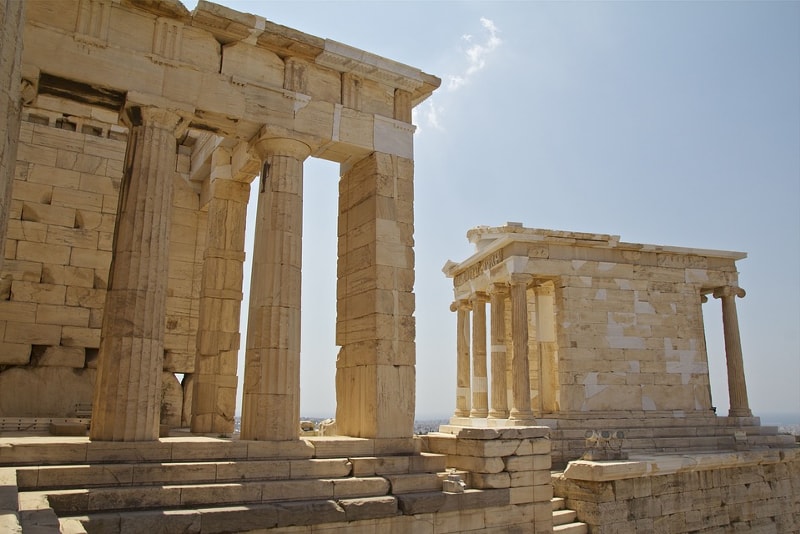
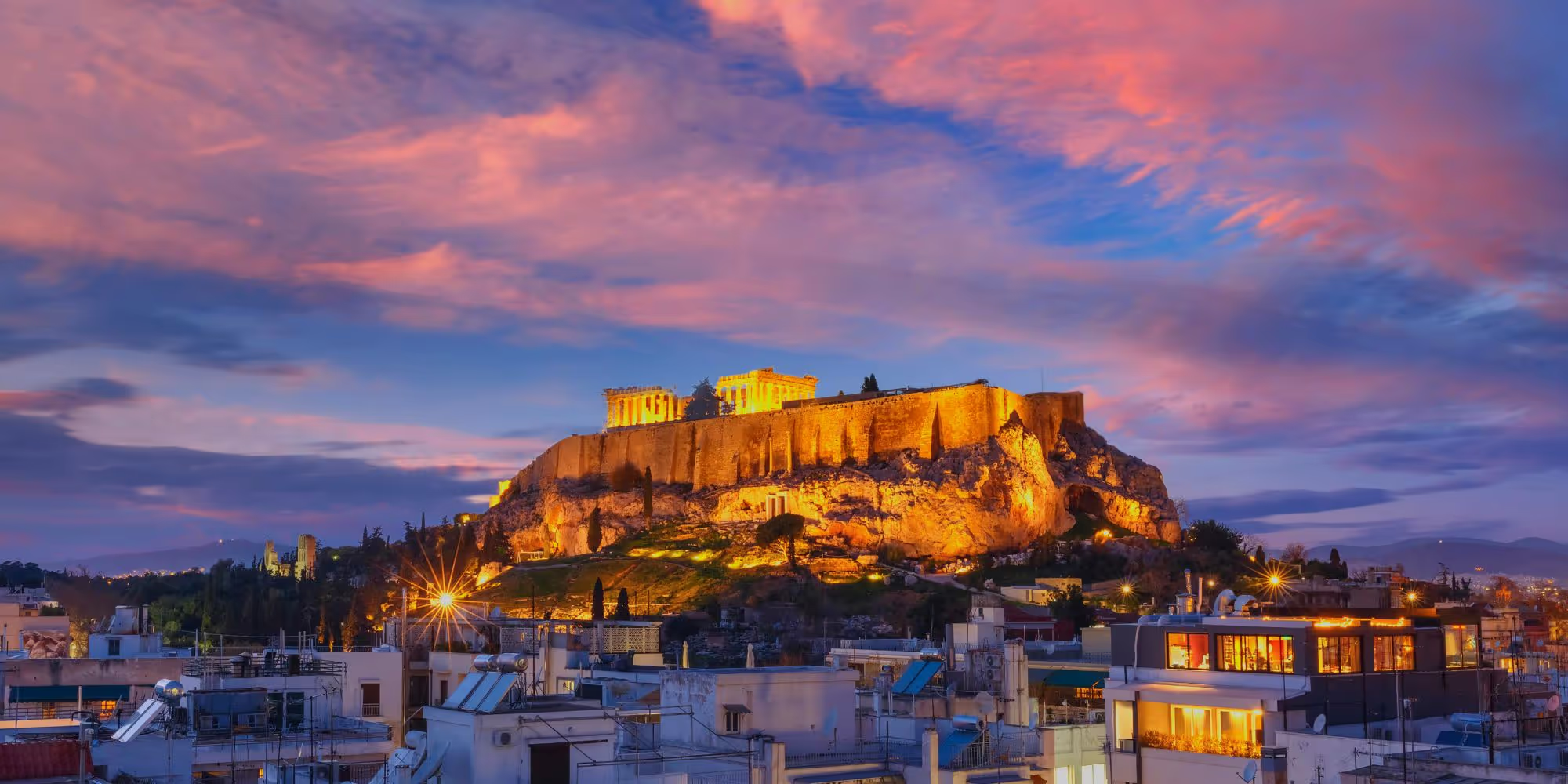
Nestled atop the ancient Acropolis of Athens, the Erechtheion temple stands as an eternal testament to the unparalleled artistry and architectural prowess of classical Greece. Constructed in the latter half of the 5th century BCE during the Golden Age of Athens, the iconic temple is enshrouded in myth, history and legend.
Deviating from the traditional, symmetrical layout of temples, the Erechtheion is dedicated to multiple deities, reflecting the diverse and complex religious beliefs of ancient Greece. Among the sacred sites within the temple is the shrine of Athena Polias, the divine protector of Athens, as well as the mythical tomb of Erechtheus, the city’s legendary founder. Read more about the architecture and history of the Erechtheion here.
Perhaps the most striking feature of the Erechtheion is its enigmatic Caryatids – six graceful, larger-than-life female statues that effortlessly bear the weight of the temple’s southern porch. The delicate interplay of light and shadow breathes life into these figures, as they eternally stand guard over the temple’s hallowed grounds.
Yes, the Erechtheion is open for visitors, as is the rest of the Acropolis. You can check the opening times of the Acropolis here.
The Erechtheion is located on the north side of the Acropolis hill in Athens, behind the Old Temple of Athena.
No, access to the interior of the Erechtheion temple is currently restricted in order to preserve the structure and artifacts within. Visitors are allowed to approach the entrance of the temple and explore the exterior, including the Porch of the Maidens and other features, such as the olive tree and well associated with Athena and Poseidon.
This, however, will change in the future since the Central Archaeological Council has approved a study for the construction of a special floor consisting of white marble stones. Once this has been completed, the public will be able to enter and explore the Erechtheion's interior.
The Erechtheion is an ancient Greek temple on the Acropolis that was dedicated to Athena and Erechtheus, the city's divine protector and founder respectively. Constructed between 421 and 406 BC, the temple is renowned for its unique layout and intricate Ionic design, which distinguishes it from the predominantly Doric style of the Parthenon, its famous neighbor.
The Erechtheion's most famous feature is the Porch of the Caryatids, where six statuesque female figures, known as Caryatids, support the temple's entablature. You can read more in our blog post on the Erechtheion’s fascinating history and architecture.
The construction of the Erechtheion began in 421 BC and were put on hold in 413 BC due to the collapse of the Athenian expedition in Sicily. The construction works resumed about 4 or 5 years later and the temple was completed in 406 BC. You can learn more about the construction of the Erechtheion in our blog post.
The architect Mnesicles from Athens is credited with designing the Erechtheion, while the temple sculptures were the work of Phidias, who also decorated the Parthenon. You can read more on the design consideration of the Erechtheion in our blog post.
The Erechtheion was built in the Ionic style, contrary to the symmetrical and mainly Doric style of the Parthenon. The Ionic style developed in the Greek cities of Asia Minor, while the Doric style developed in the western Greek world and the Peloponnese. Athenians considered themselves to be at the crossroads of these two worlds, which was reflected in the variety of styles on the Acropolis. Our blog post on the Erechtheion further details the intricacies and unique characteristics of the temple.
The Caryatids, found on the porch of the southern section of the temple, are sculpted female figures which supported the temple’s architrave. They are thought to represent maidens from the Karyes in Laconia and were likely made to memorialize the tomb of the mythological half-serpent king of Attica, Cecrops (or Kekrops). Learn more about their significance in our blog post on the history and design of the Erechtheion.
The Caryatids currently at the Erechtheion are replicas of the originals. One of the Caryatids was controversially removed by Lord Elgin prior to the Greek War of Independence and is currently on display at the British Museum. The remaining five were replaced with copies in 1978 for protection and restoration, and are currently displayed at the Acropolis Museum.

A free official Digital Tour Guide for the Acropolis launches in March 2026, offering visitors a modern and accessible way to explore Greece's most iconic archaeological site.

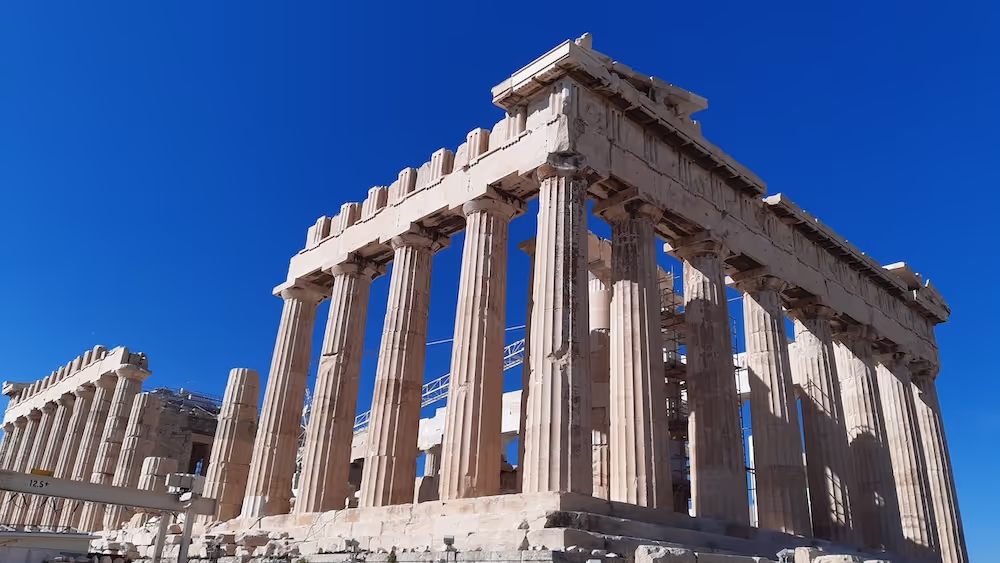
The Parthenon stands free of scaffolding for the first time in decades. Visit the Acropolis in Athens and see Greece’s landmark fully revealed.

Acropolis closes midday from the 22nd to the 25th of July 2025 due to extreme heat. Discover how to stay cool in Athens and explore top indoor museums and attractions during summer heatwaves.

Preparing for the summer heat at the Acropolis requires careful planning around timing, hydration, attire, and equipment. With the right strategies and gear, visitors can focus on the remarkable experience, rather than the discomforts of the season.

The Acropolis Summer prices are effective starting today and the Acropolis Pass is no longer available. Discover everything there is to know about the new tickets to book the best ones for your needs!

Official Acropolis tickets for April aren’t available yet, leaving third-party vendors as the only option—at a higher cost. Book early to secure your visit!

Starting April 1 2025, Acropolis tickets switch to summer rates: €30 for adults, no reduced option. Book online for a hassle-free visit to this iconic UNESCO site!

Celebrate New Year’s Eve at the Acropolis with dazzling fireworks, live music, and Greek cuisine. Blend ancient history and modern festivity for an unforgettable night. Plan tickets, respect traditions, and savor Athens' vibrant energy.

The new prices for the Acropolis for the 2025 winter season have been released, the reductions have been cancelled.

Find out if it's possible to visit the Acropolis at night and other breathtaking options

The Acropolis will be partially closed on the 23th of July 2024 due to expected high temperatures.

Best Movies Featuring the Acropolis of Athens: Cinematic Journeys Through Ancient History

All you need to know about the Acropolis’ new limit of 20,000 daily visitors plus the new entry system designed to reduce overcrowding and protect the UNESCO site.

Explore the fascinating history and unique architecture of the iconic Erechtheion temple, and uncover the meaning behind its world-renowned Caryatids.

The acropolis of a city was used in many ways, with regards to ancient time and through references. Because an acropolis was built at the highest part of a city, it served as a form of protection as well as a shelter.

An acropolis was the settlement of an upper part of an ancient Greek city, especially a citadel, and frequently a hill with precipitous sides, mainly chosen for purposes of defense.