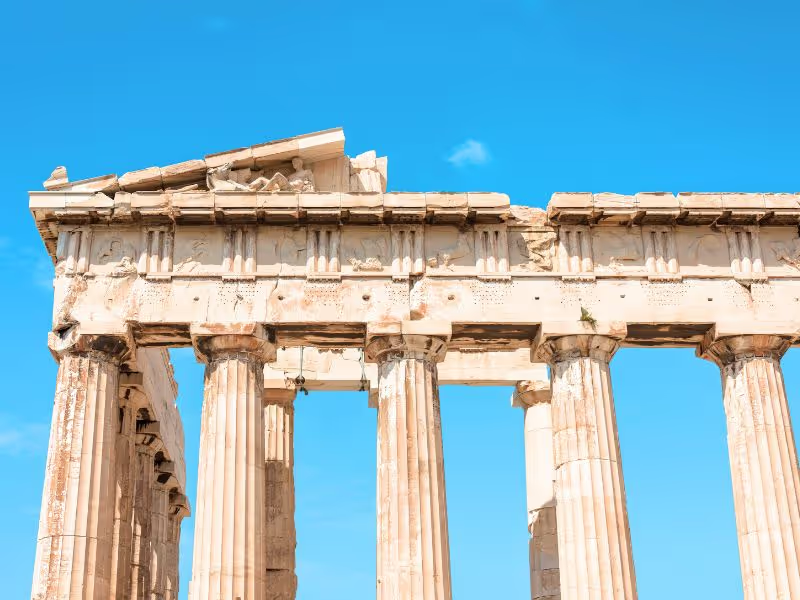
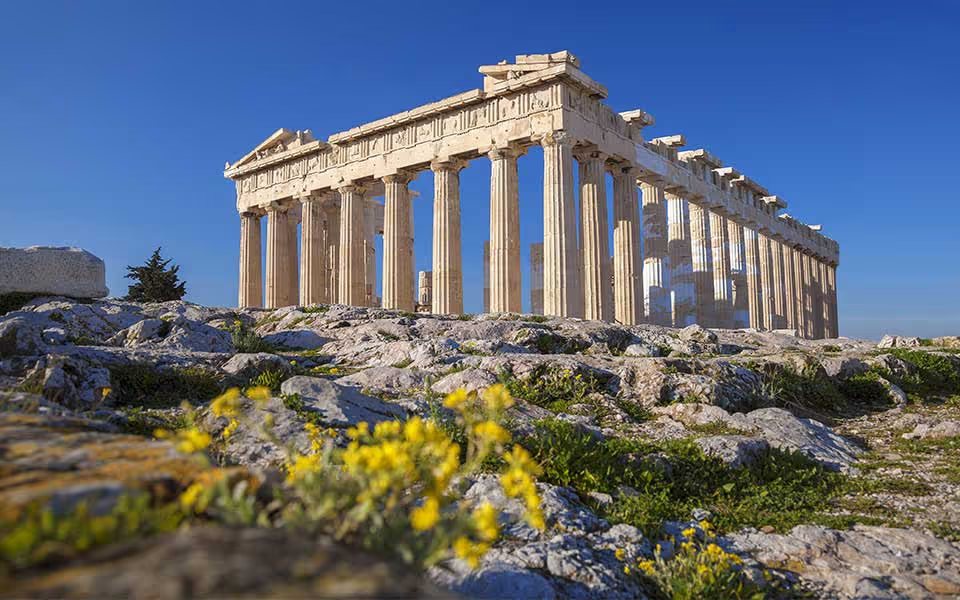
The Parthenon stands as an enduring symbol of Ancient Greece, Western Civilization, and classical architecture. Dedicated to the goddess Athena, this magnificent temple was once the pinnacle of Athenian power and a testament to the city-state's wealth and cultural achievements. Perched atop the Acropolis in Athens, it offers insights into the religious and cultural life of Greece during its Golden Age.
Crafted during the High Classical period, the Parthenon is often hailed for its architectural precision and the artistry of its sculptures. Despite the damage it has suffered through centuries, including wars, explosions, and looting, the structure remains a profound statement of the sophistication and skill of its architects and artists. Its harmonious proportions and the implementation of the Doric order distinguish it as a masterpiece of human creativity.
The Parthenon has served as a monumental hub for religious devotion and cultural expression for centuries. From its inception, it has embodied the reverence of the Athenians towards their patron deity and subsequently adapted to changing religious landscapes.
Tickets to the Parthenon are essential for entrance to the Acropolis complex. Prices vary, typically around €15 for a standard admission ticket, with reduced rates available during off-peak seasons and for select visitor categories. To avoid the long queues it is highly recommended to purchase skip-the-line tickets in advance, particularly if you’re planning a last-minute visit. Many visitors find the best time to visit is early morning or late afternoon, when the weather is cooler and the site is less crowded.
By opting for a guided tour you can enhance your visit with insightful commentary on the Parthenon’s history and significance. Tours vary in length and detail, with offerings including group or private options and even tours with an audio guide for a self-paced experience. While guided tours are an additional cost, they provide in-depth knowledge and context that can greatly enrich your understanding of the ancient ruins.
The Parthenon was primarily a temple dedicated to Athena, the patron deity of Athens. It also served religious purposes and occasionally as a treasury for the city.
The Parthenon's architecture, with its Doric columns and precise proportions, symbolizes the values of order, harmony, and balance, hallmarks of classical Greek art and thought.
Construction of the Parthenon began in 447 BC and was completed in 432 BC.
The Parthenon has undergone several restorations with the most significant efforts starting in the 1970s, and continuing to this day.
The Parthenon was designed by architects Iktinos and Kallikrates, while the famous sculptor Phidias supervised the sculptural decorations.
The Acropolis is the ancient citadel located on a rocky hill in Athens, which includes several buildings of historical significance, while the Parthenon is the most famous and prominent structure within the Acropolis complex. Read more about this subject here.
Entry into the Parthenon itself is not allowed. Visitors can walk around the building and view it from the outside.
The Parthenon is situated on the highest part of the Acropolis hill, making it the most striking and visible monument upon entering the site.
The Parthenon measures approximately 31 meters by 69.5 meters and its columns are around 13 meters high.