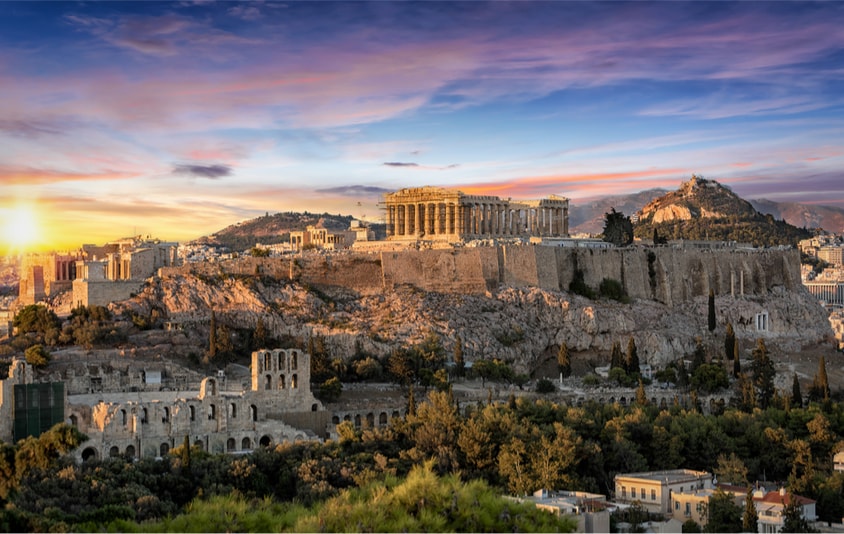
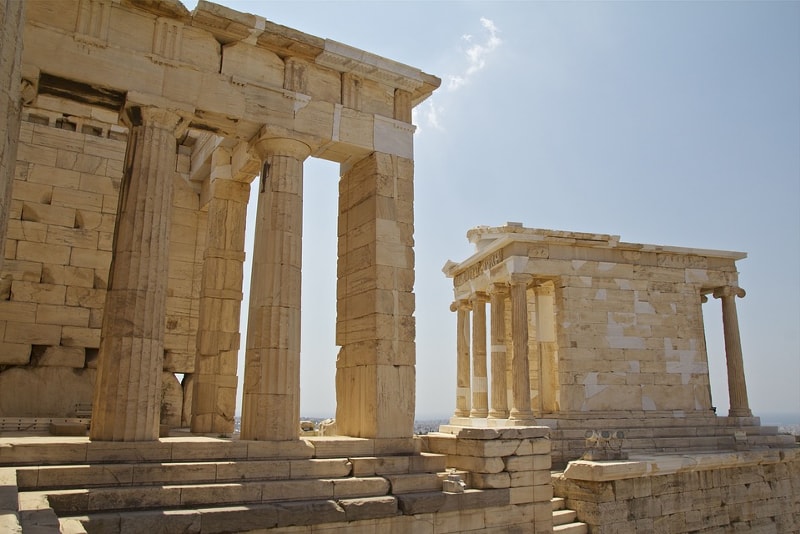
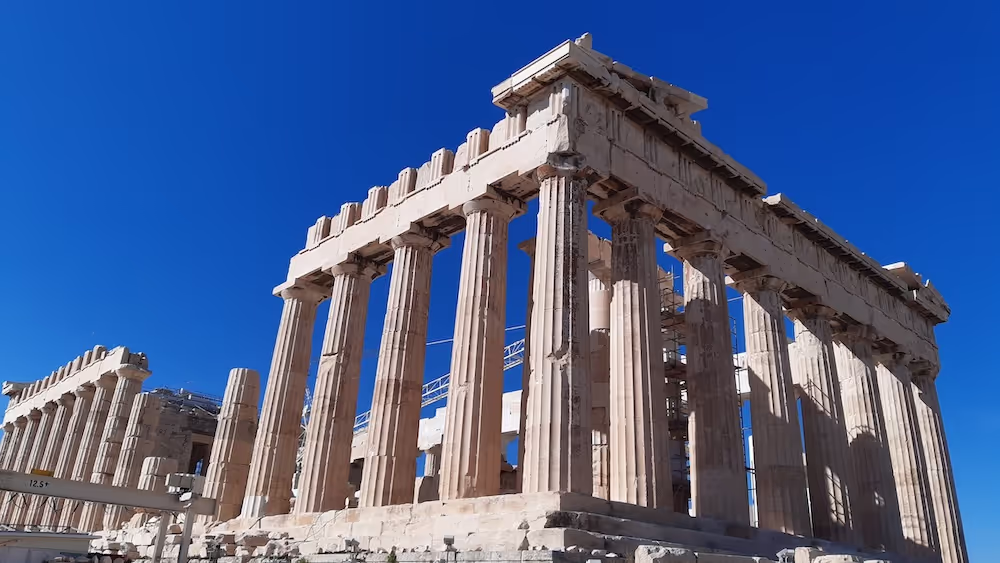
Nestled on the southwest corner of Athens Acropolis, the Temple of Athena Nike stands as a testament to the enduring legacy of ancient Greek artistry and devotion. This petite yet pivotal structure, a creation of the renowned architect Kallikrates, epitomizes the architectural elegance of the High Classical Period. With its completion in 420 BC, the temple replaced an earlier sanctuary, tragically razed during the Persian Wars.
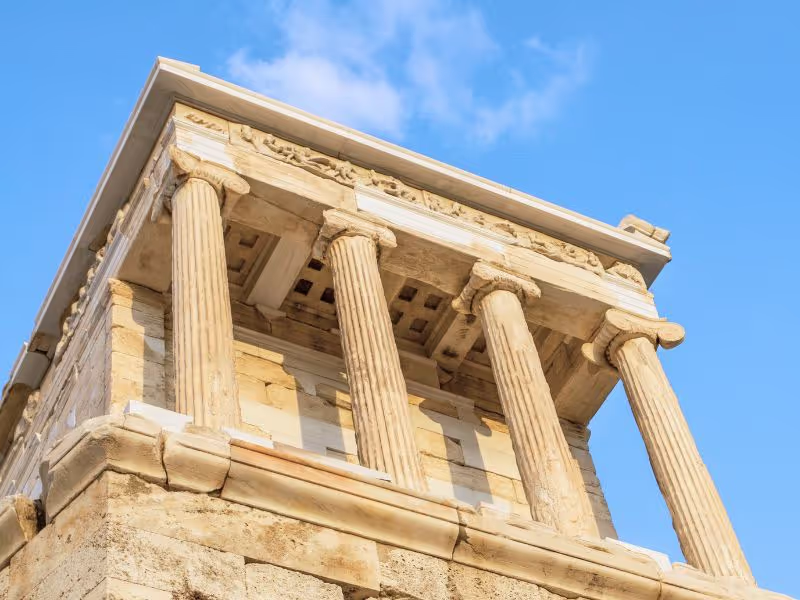
The Temple of Athena Nike, though the smallest on the Acropolis, holds a distinct aura of grandeur. Its Ionic order, crafted from the radiant white of Pentelic marble, is a stunning example of the amphiprostyle design. This unique layout, with columns gracing only the front and back but absent on the sides of the cella, enhances its charm. Each monolithic column, a single stone marvel, contributes to the temple's harmonious proportions, deliberately chosen to create a visual balance with its imposing neighbor, the Doric Propylaea.
Closer inspection of the temple's sculptural elements reveal its splendor, with a continuous Ionic frieze wrapping around the edifice, depicting divine assemblies and historical battles. The pediments, though largely lost to time, are believed to have celebrated mythological victories, with the Gigantomachy and Amazonomachy taking center stage. Around 410 BC, a protective marble parapet was added, adorned with reliefs of the goddess Athena and winged Nike in various poses, capturing the essence of victory and sacrifice.
The statue of Athena Nike, housed within, symbolized unyielding victory. Known as Athena Apteros, the wingless statue was believed to ensure the goddess's eternal presence in Athens. The temple's role evolved through the centuries, transforming into a Christian church in the 5th century AD, only to be dismantled by Ottoman Turks in the 17th century for fortification materials.
The modern era brought resurrection to this historic site. After Greece's independence in 1832, the temple was reconstructed, with further restorations in the 1930s and a significant conservation project in recent years. Specialists meticulously dismantled, examined, and reassembled the temple, infusing new life into this ancient gem.
Visitors today can witness the legacy of the Temple of Athena Nike in the Acropolis Museum, where fragments of its original frieze and the renowned relief, Nike Adjusting Her Sandal, are displayed. These pieces, embodying both grace and everyday humanity, invite onlookers to connect with a world long past but never forgotten.
The Temple of Athena Nike's journey, from its 6th-century BC origins to its present-day splendor, mirrors the resilience and creativity of Athens itself. As a beacon of victory, artistry, and reverence, it continues to captivate and inspire, bridging the ancient and modern worlds with its timeless beauty.
The Temple of Athena Nike stands as a magnificent tribute to the Greek goddess Athena, celebrated in her role as the triumphant protector of the city. Athena, a deity with deep roots in Greek mythology, was known by various epithets, each reflecting a different aspect of her persona.
As Athena Nike, she was the bringer of victory; as Athena Ergane, she was the patron of craftsmanship; Athena Promachos celebrated her as a warrior leading the charge; and Athena Parthenos, the Virgin, from which the Parthenon derives its name. While historians have speculated about Athena’s origins possibly being influenced by Mesopotamian, Phoenician, or Egyptian deities, this theory remains a subject of debate. Her identity is predominantly seen as a mirror of Greek culture, especially in her embodiment of the Greek war spirit and patriotism.
According to Greek mythology, Athena was born without a mother, fully grown and armed, from Zeus’s forehead. Being the favorite child of Zeus, the ancient goddess was a central figure among the Olympian gods. Her influence extended over a wide array of domains, prominently including wisdom, warfare, and various arts and crafts. In Athens, she was especially revered as a symbol of the city-state’s strength and unity.
Alongside Athena, the figure of Nike, also known as Winged Victory, holds significant importance. Emerging from the union of Pallas, the god of warfare, and Styx, the goddess of hatred who also oversaw the underworld's River Styx, Nike was a symbol of triumph. Her role in aiding Zeus to defeat the Titans secured her a revered place among the Olympian gods.
Nike’s influence, however, transcended the battlefield. She was associated with Zeus as a representation of supreme power, with Athena in the realm of warfare, and with Aphrodite, symbolizing victory in love. Often depicted as a winged woman, her most famous representation is the Nike of Samothrace, which is exhibited in the Louvre Museum. In art, Nike frequently appeared alongside other deities, notably in Athena’s statue in the Parthenon, symbolizing her integral role in the pantheon.
The Temple of Athena Nike, therefore, is a testament to the intertwined narratives of Athena and Nike. It symbolizes the ancient Greeks’ deep-seated beliefs in divine protection and victory, reflecting the cultural and religious significance of these deities in the everyday life and statecraft of ancient Athens.
The construction of the Temple of Athena Nike began in 426 BC was completed in 421 BC.
The Temple of Athena Nike was designed by the architect Kallikrates.
The Athena Nike temple is built in an Ionic amphiprostyle, featuring a four-columned design and porticoes at both the front and rear.
The most distinctive decorations of the temple features are the friezes, which depict scenes of Greek mythology and battles, and a parapet with reliefs of the goddess Nike.
Yes, the temple of Athena Nike was restored multiple times, most notably in the 1830s and again in 2010.
The statue of Nike, particularly the famous relief of Nike fixing her sandal, symbolizes victory and was part of the temple’s focus on Athena as the goddess of victory.
Yes, the Temple of Athena Nike is generally open to the public, but access may vary depending on ongoing conservation efforts.
Visitors can view the temple of Athena Nike up close, but entering the interior is typically not permitted to preserve its historical integrity.
The Temple of Athena Nike is located at the southwest corner of the Acropolis, near the entrance.
The Temple of Athena measures approximately 8 meters in width and 5 and a half meters in length. It is smaller and more modest compared to other prominent structures within the Acropolis of Athens, such as the Parthenon and the Erechtheion.

A free official Digital Tour Guide for the Acropolis launches in March 2026, offering visitors a modern and accessible way to explore Greece's most iconic archaeological site.

The Parthenon stands free of scaffolding for the first time in decades. Visit the Acropolis in Athens and see Greece’s landmark fully revealed.

Acropolis closes midday from the 22nd to the 25th of July 2025 due to extreme heat. Discover how to stay cool in Athens and explore top indoor museums and attractions during summer heatwaves.

Preparing for the summer heat at the Acropolis requires careful planning around timing, hydration, attire, and equipment. With the right strategies and gear, visitors can focus on the remarkable experience, rather than the discomforts of the season.

The Acropolis Summer prices are effective starting today and the Acropolis Pass is no longer available. Discover everything there is to know about the new tickets to book the best ones for your needs!

Official Acropolis tickets for April aren’t available yet, leaving third-party vendors as the only option—at a higher cost. Book early to secure your visit!

Starting April 1 2025, Acropolis tickets switch to summer rates: €30 for adults, no reduced option. Book online for a hassle-free visit to this iconic UNESCO site!

Celebrate New Year’s Eve at the Acropolis with dazzling fireworks, live music, and Greek cuisine. Blend ancient history and modern festivity for an unforgettable night. Plan tickets, respect traditions, and savor Athens' vibrant energy.

The new prices for the Acropolis for the 2025 winter season have been released, the reductions have been cancelled.

Find out if it's possible to visit the Acropolis at night and other breathtaking options

The Acropolis will be partially closed on the 23th of July 2024 due to expected high temperatures.

Best Movies Featuring the Acropolis of Athens: Cinematic Journeys Through Ancient History

All you need to know about the Acropolis’ new limit of 20,000 daily visitors plus the new entry system designed to reduce overcrowding and protect the UNESCO site.

Explore the fascinating history and unique architecture of the iconic Erechtheion temple, and uncover the meaning behind its world-renowned Caryatids.

The acropolis of a city was used in many ways, with regards to ancient time and through references. Because an acropolis was built at the highest part of a city, it served as a form of protection as well as a shelter.

An acropolis was the settlement of an upper part of an ancient Greek city, especially a citadel, and frequently a hill with precipitous sides, mainly chosen for purposes of defense.