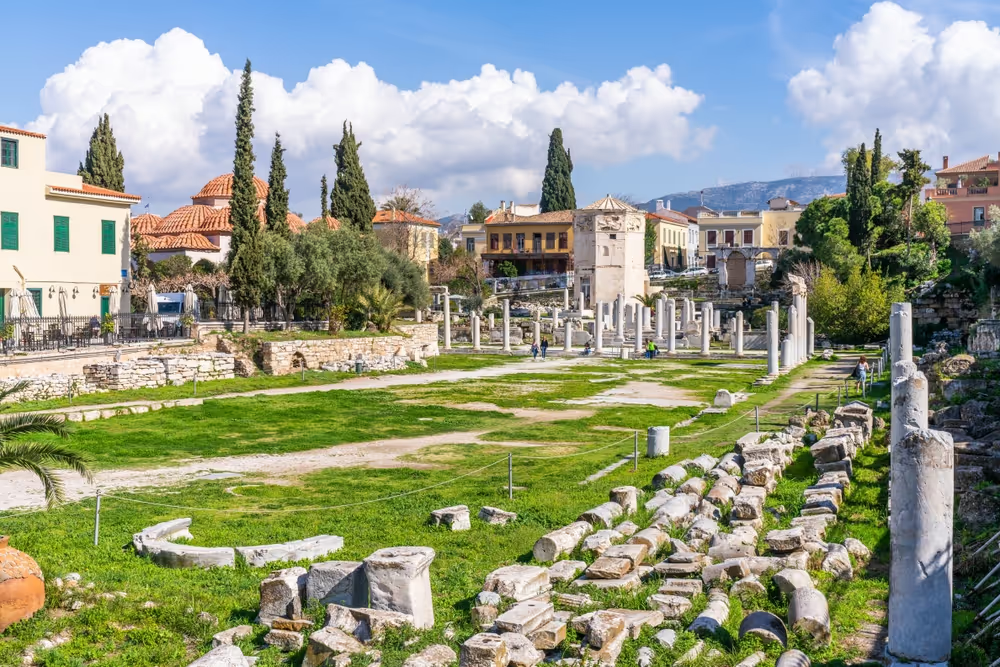
Built in the late 1st century BCE under Emperor Augustus, the Roman Agora became the commercial and administrative heart of Roman Athens. Serving as a bustling marketplace and civic center, it housed shops, public offices, and a spacious courtyard where merchants and citizens gathered. Augustus aimed to modernize Athens while integrating Roman infrastructure, reinforcing the city's role as a thriving urban hub. As a symbol of Roman authority, the Roman Agora demonstrated the empire's influence while respecting Athens' historical significance.
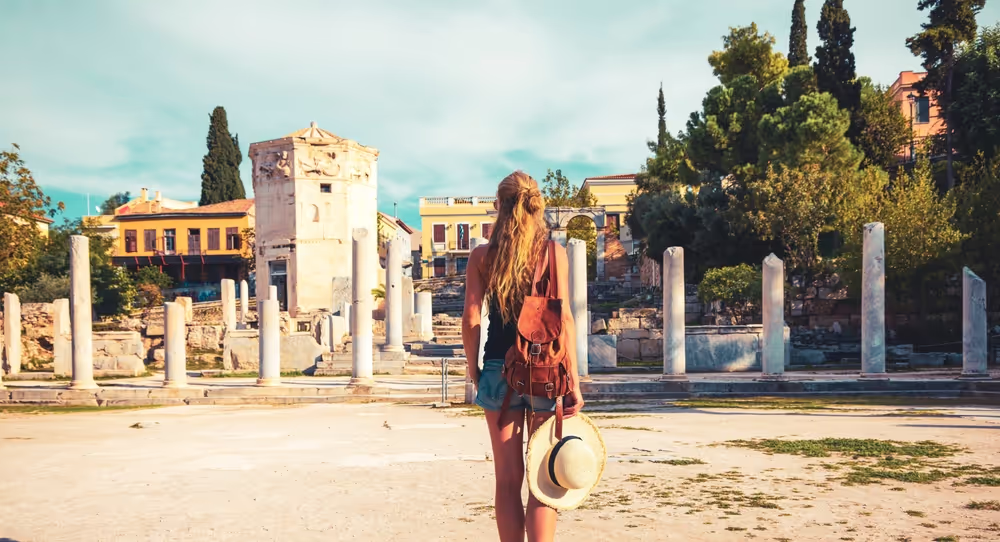
Architecturally, the Roman Agora reflects the grandeur of Roman urban planning. The complex featured a large open courtyard surrounded by stoas, shops, and official buildings, including the striking Gate of Athena Archegetis, a monumental entrance funded by Julius Caesar and Augustus. Its colonnaded design and use of high-quality marble emphasized both functionality and imperial ambition. The well-preserved Tower of the Winds, an elegant octagonal structure that served as a water clock and weather vane, highlights the Romans' fusion of practicality and artistry, making the site a lasting testament to their presence in Athens.
The basic ticket costs 8€ for adults and 4€ for people over 65 years or non-EU people between 6 and 25 years. Entry is free for EU residents up to 25 years and children younger than 5. There is also a combined ticket that includes the Acropolis, the Olympieion, the Ancient Agora, Hadrian's Library, the Kerameikos, Aristotle's School and the Roman Agora for 30€ that you can find in our ticket section or on the official website.
Admission is free on the 6th of March, the 18th of April, the 18th of May, the last weekend of September and the 28th of October. This offers a great opportunity to explore this ancient marvel without any cost. You can see the full list of free days and any variations on the official website.
A typical visit to the Roman Agora may take about 30 to 60 minutes. This time frame allows visitors to explore the ruins and marvel at the Gate of Athena Archegetis and the Tower of the Winds, learn about the site’s history, and appreciate its architectural features.