Visitors entering the Acropolis should consider beginning their tour at the Southeastern entrance, where crowds tend to be smaller, especially during peak hours.
The initial segment of the path leads towards the Theatre of Dionysus, which can be an enlightening first stop. Here, visitors are captivated by the remnants of what was once a grand venue for ancient performances. Continuing uphill, the path veers to the Odeon of Herodes Atticus, notable for its remarkable restoration. It is worthwhile to pause for a moment to appreciate its structure before moving on.
As the ascent continues, the Propylaea Gate awaits. This monumental gateway serves as the traditional entrance to the Acropolis and marks the transition into the heart of the historical site. Visitors should pass through it, as the ancient Athenians once did, ready to explore the sacred hill's highlights.
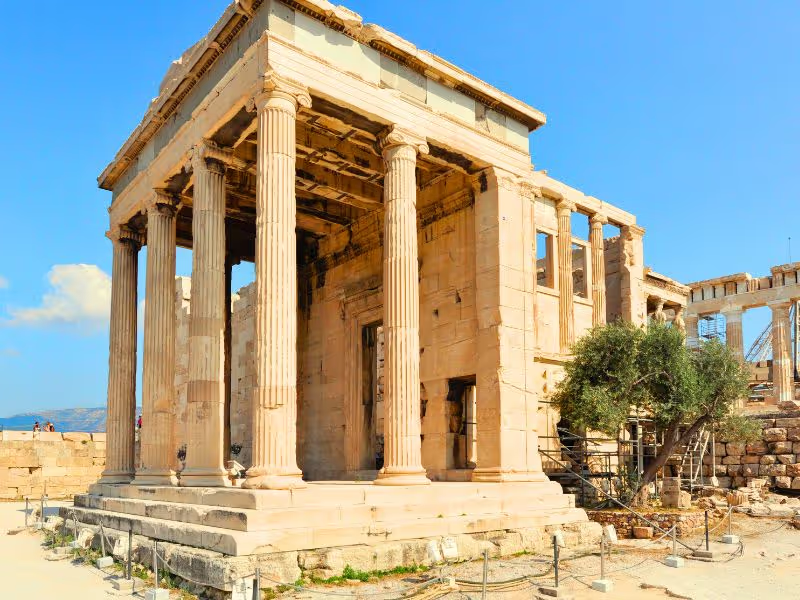
Once inside, the Erechtheion, with its iconic Caryatids, is a sight not to be missed. Afterward, it's imperative to behold the Parthenon, the centerpiece of the Acropolis and a symbol of architectural excellence. For the optimal route, one should follow the marked pathways that loop around the Parthenon. This allows for both an up-close appreciation of the temple and expansive views over Athens.
Before departing, ensure to allocate time for the Acropolis Museum, where many of the original sculptures and artifacts are preserved. Access to the museum is often included in the combined ticket and serves as a perfect conclusion to the Acropolis experience.